
Why Women Are a Growth Segment, Not a Social Impact Segment
Women are often treated as a social impact audience. They appear in CSR strategies, diversity initiatives and purpose campaigns. Brands are encouraged to represent women more fairly, design products with women in mind and communicate with women more thoughtfully.
All of that matters.
But there is another way to look at women that gets much less attention:
Women are a growth segment.
If women are valuable customers, making a brand more gender sensitive isn't just the right thing to do. It is good business.
I've been working with the M-KOPA gender team over the past year on several projects, and one of the things I've found particularly interesting is how seriously they treat women as customers and as a driver of business growth.
One of the first projects we worked on was a sales course designed to help M-KOPA sales representatives sell more effectively to women.
The project reinforced something I increasingly believe about gender and brand strategy: when a company starts taking women seriously as customers, it changes much more than its marketing.
What is a growth segment?
A growth segment isn't simply a demographic group you create a campaign for. It's a group of customers whose needs, behaviour and potential are important enough to justify serious investment in understanding and serving them better.
That means research.
It means looking at the product and customer experience.
It means understanding where potential customers are dropping out or choosing competitors.
It means adapting how you market and sell.
And it means building the capabilities inside the organisation to serve those customers well.
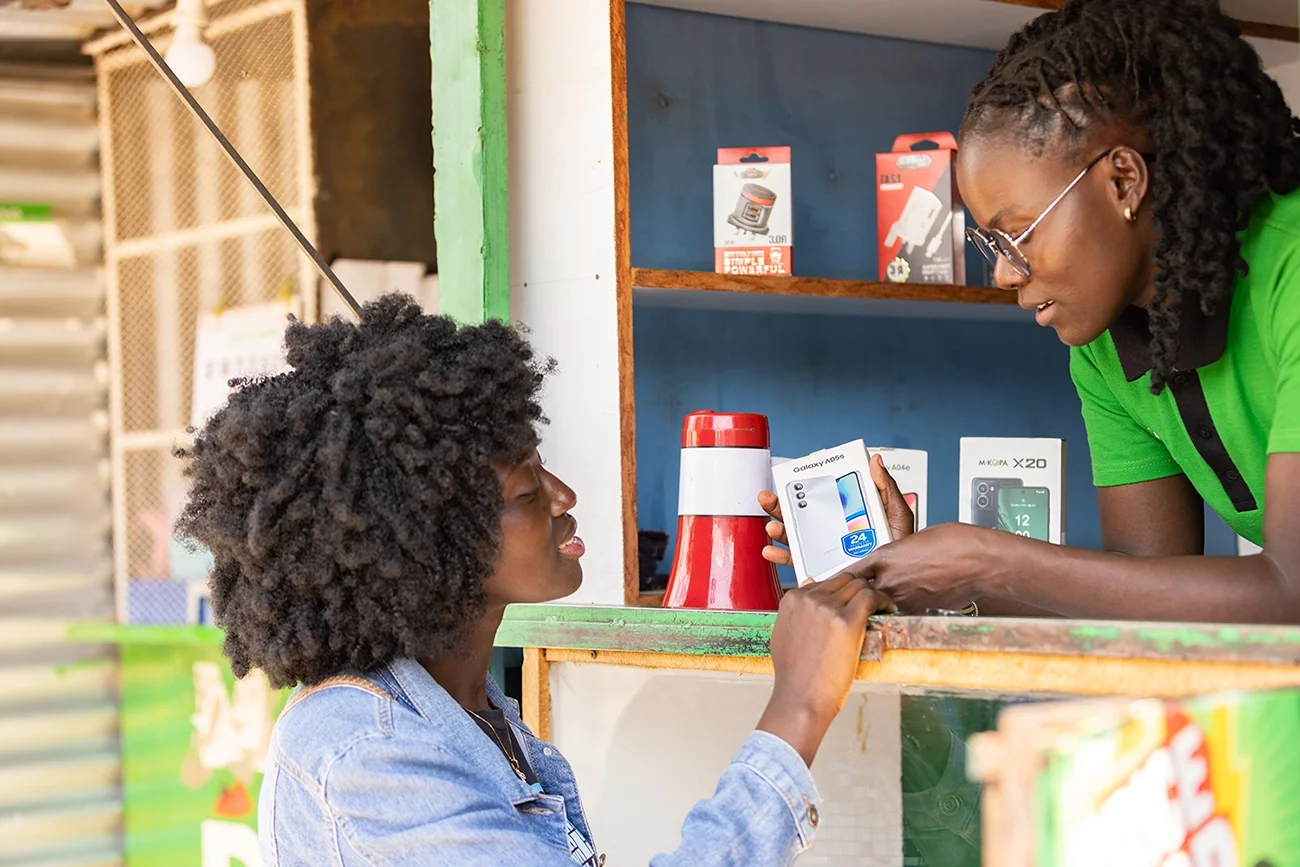
M-KOPA sales representative (DSR) selling a smart phone to a female customer
This is why I think it's limiting to talk about women primarily through the lens of inclusion or social impact. If women are an important customer group, the more useful question is: What could happen to the business if we treated women as a serious growth opportunity?
That shifts the conversation from doing something for women to building a better business for women.
Why gender inclusion is more than marketing
One of the easiest mistakes a company can make is to treat gender as a communications problem: change the imagery, use more women in advertising, create a campaign for International Women's Day, update the language.
All useful things, perhaps. But none of them necessarily change the experience a woman has with your brand. If research tells you that women experience your product, service or sales process differently, the answer might be to change the experience itself.
That could mean changing the product. It could mean changing the sales journey, the way information is presented, the channels you use, or how your team interacts with customers.
“Otherwise, you end up with what I think of as all talk and no rock: lots of inclusive messaging, without much changing underneath it.”
When women are treated as a growth segment, gender becomes part of the business conversation.
It starts influencing product, customer experience, marketing, sales and the skills the organisation needs to build.
What M-KOPA taught me about marketing to women
I've been working with the M-KOPA gender team on several projects over the past year. What I loved about the collaboration was how seriously the team takes women as a customer segment.
They weren't starting with a request to make the brand look more inclusive. They had invested heavily in understanding women as customers, which meant we had a wealth of research and customer insight to work with. That changes the quality of the work.
Instead of making assumptions about what women want, you can start asking better questions:
Where are women encountering friction?
What do they need from the product and service?
What might make them more likely to choose the brand?
What happens during the sales experience?
And what can the organisation do differently?
For me, this is where gender strategy becomes much more interesting.
It stops being about making a brand more female-friendly and starts being about understanding a significant group of customers well enough to build a better business for them.
1. Start with customer research
You can't build a growth strategy around assumptions about women. You need to understand them as customers. That sounds obvious, but it's surprisingly easy for brands to skip this step. Women are often treated as a single audience with a collection of assumed characteristics, rather than as customers whose behaviour, needs and experiences can be researched.
The M-KOPA gender team's approach gave us something much more useful: actual research and insights about women customers.
That meant the sales course could be grounded in what the team had learned, rather than generic advice about "how to sell to women."
You can't build a growth strategy around a stereotype. You have to understand the customer.
Good customer research also gives you somewhere to go next.
Once you understand where women experience friction or where their needs aren't being met, you can start looking at what the business can actually change.
2. Change the customer experience
Research is only useful if you're prepared to act on it. If women are behaving differently at a particular point in the customer journey, or encountering barriers that men aren't, changing the advertising isn't enough. You may need to change the experience.
That could mean rethinking how a product is explained, how a sales conversation happens, how a service is delivered or how a customer gets support. This is one of the reasons I like working on brand from a broader perspective.
A brand isn't just what you say about yourself. It's the experience people have when they encounter your organisation. So making a brand more gender sensitive can mean changing what happens at every point where a customer comes into contact with it.
If the customer experience hasn't changed, changing the messaging is unlikely to be enough.
3. Build gender capability into sales
The third piece is capability. Even if a company has great research and has made improvements to its product and customer experience, those changes still have to reach customers. In M-KOPA's case, that meant building the skills of the people who have conversations with customers every day: the sales team.
We worked together to turn the research and insights into a practical sales course, giving M-KOPA sales representatives specific ways to sell more effectively to women.
Course Trailer. The Mastering Sales to Women course launched to 10,000 DSRs across five markets.
I particularly enjoyed this part of the project because it moved the work from strategy into behaviour. The goal wasn't simply to tell the sales team that women are an important customer group. It was to give them practical things they could do differently.
The result was a custom course loaded with practical sales tips, designed around the insights the M-KOPA team had gathered. The course launched to the sales team in December 2025, and I'm very curious to see what the results tell us.
Turning gender inclusion into a growth strategy
The M-KOPA project reinforced something I think more companies should consider: Women don't need to be treated as a special project. They need to be treated as customers.
If women are a significant and valuable customer group, then understanding them better, improving their experience and building the capabilities to serve them better should be part of the growth strategy.
That doesn't make the social impact case for gender inclusion less important. It adds another reason to take the work seriously.
When a company takes women seriously as customers and as drivers of business growth, the implications go far beyond marketing.
You put time, people, resources and research into understanding them.
You become willing to review your product, service and customer experience.
You build new skills inside the organisation.
And, ultimately, you have a better chance of building something women actually want to choose.
That's when gender inclusion stops being a CSR initiative and starts becoming a growth strategy.
This article is based on my work with the M-KOPA gender team. The sales course referenced in this article is an internal M-KOPA resource and is not publicly available.